THE ART OF THE SINGLE WHISK
In praise of the four-hundred-year-old ceremony that teaches modern society how to slow down.
Kenjiro Takahashi
15th Generation Tea Master, Uji
Matcha is not an espresso. It does not exist to propel you into hyperactivity. Rooted in the Zen Buddhist monastic traditions of 12th-century Kyoto, matcha was carried across the Sea of Japan by the monk Eisai not as an indulgence, but as an anchor for long hours of silent meditation.
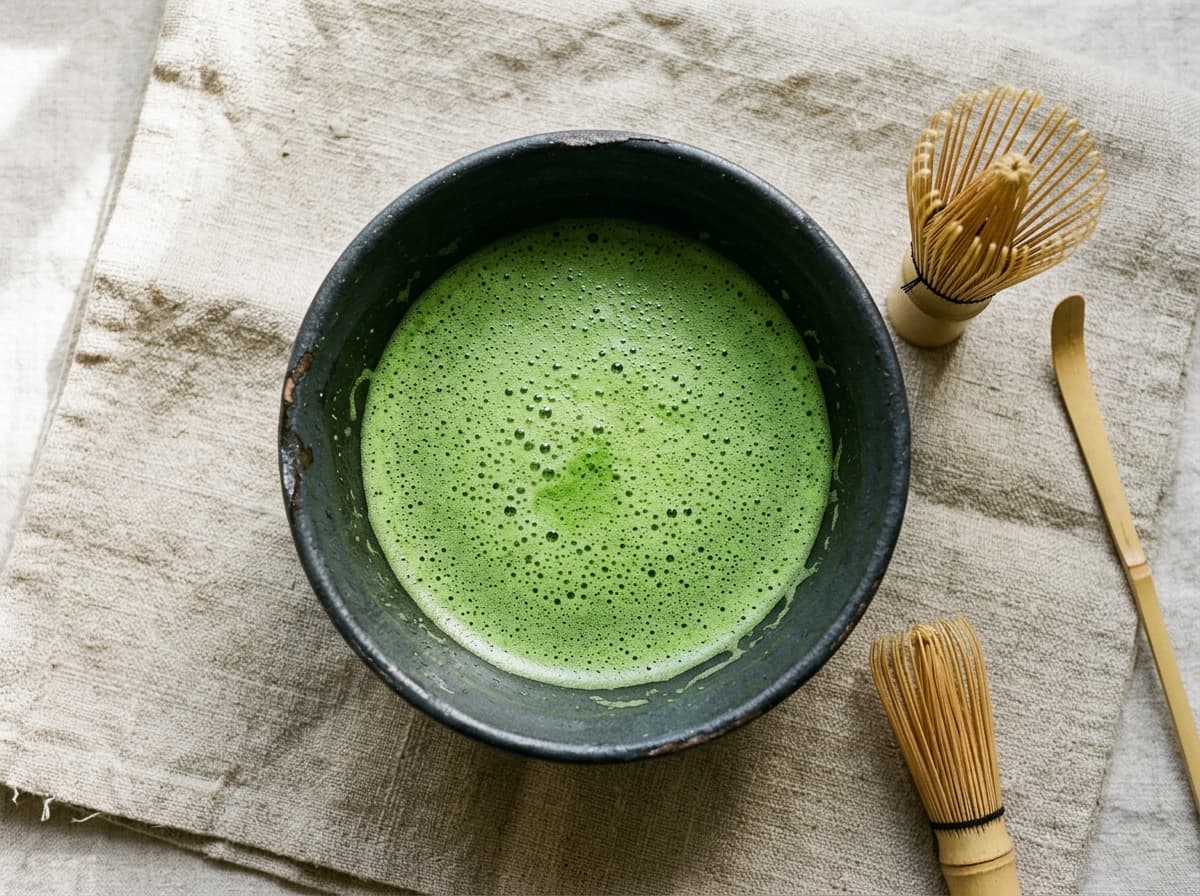
When you grasp the chasen—carved from a single cylinder of cured golden bamboo—you are engaging with a lineage that predates printing presses, steam engines, and silicon chips. The bamboo prongs do not merely agitate liquid; they weave oxygen into stone-ground tencha leaves, transforming concentrated chlorophyll into microfoam.
“The tea ceremony is not an exhibition of technique. It is the architecture of presence.”
Granite and Daylight
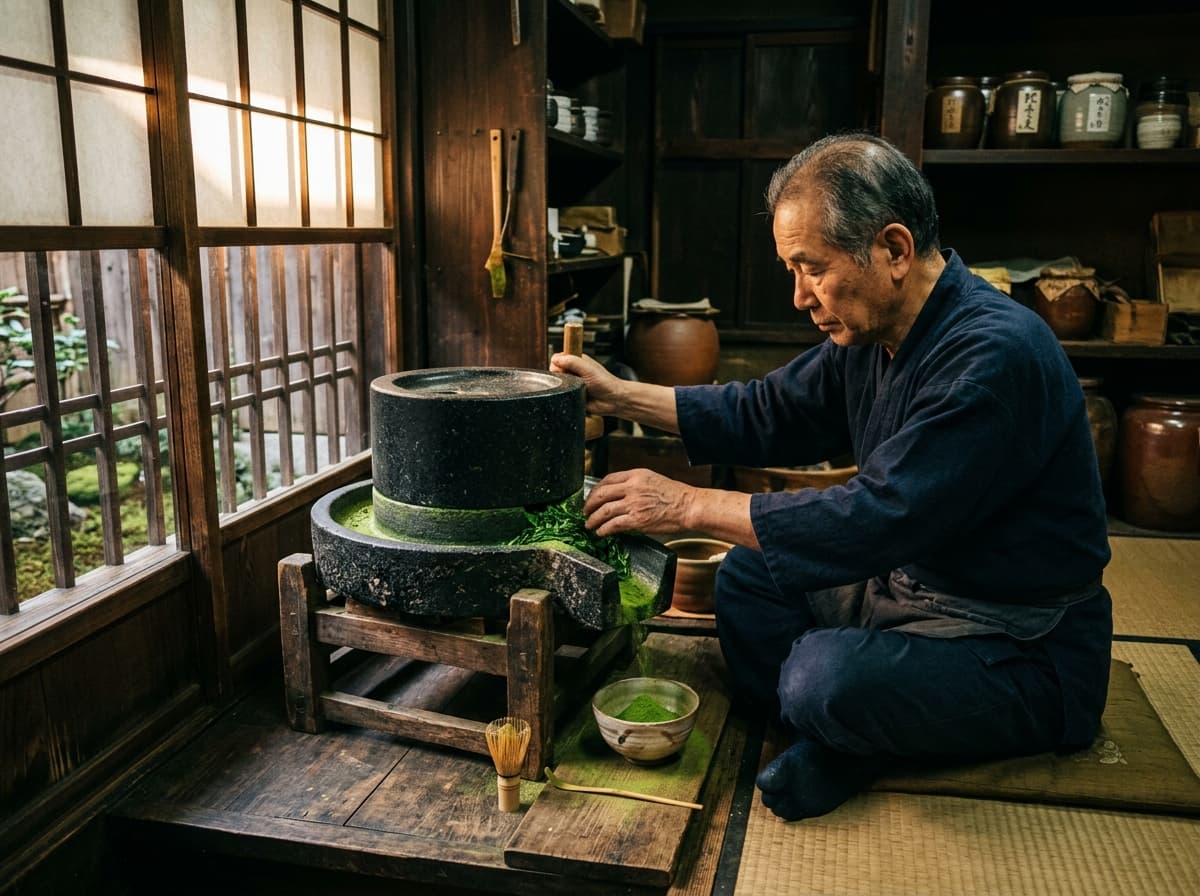
In modern industrial food production, speed is the sole metric of virtue. In Uji, however, speed is the adversary of flavor. A traditional volcanic stone mill turns at just fifty revolutions per minute. At that exact cadence, friction does not scorch the volatile tea oils, yielding barely forty grams of powder each hour.
To drink a bowl of ceremonial usucha is to partake in twenty-eight days of shaded darkness, three generations of cultivar selection, and ninety minutes of stone milling. When viewed through this lens, every sip demands your absolute presence.