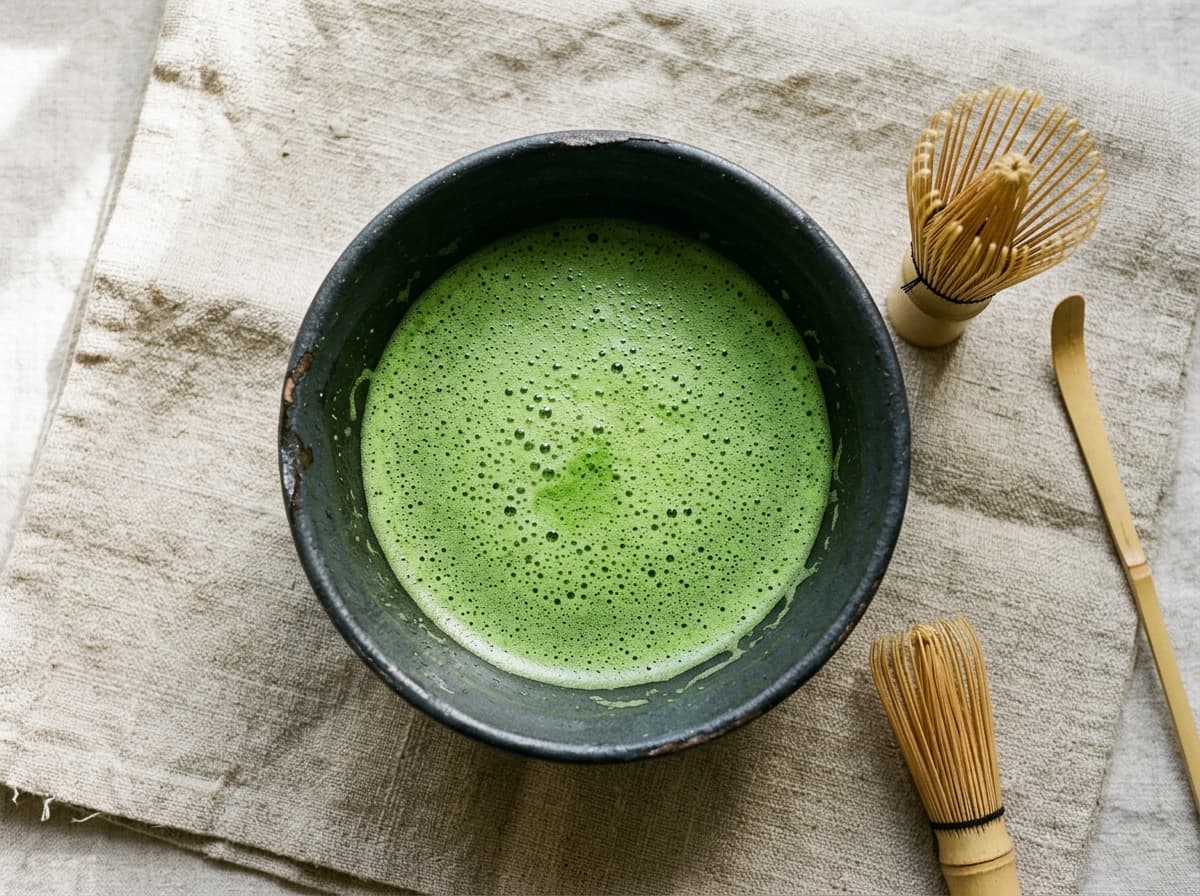
WHY CEREMONIAL GRADE MATTERS
Deconstructing shaded cultivation, first-harvest amino acids, and the chemistry of pure umami.
Elena Vance
Director of Tea Sourcing, VERDÉ
Twenty-five days before harvest, when the tender spring buds first unfurl across the terraced hills of Uji, agricultural workers install black shade tarps over the entire canopy. Sunlight exposure drops by ninety-eight percent.
Deprived of sunlight, the tea plant Camellia sinensis enters an acute biological preservation state. Unable to synthesize sun-induced polyphenols (which cause astringency and bitterness), the plant supercharges its production of L-theanine and amino acids, sending rich emerald chlorophyll surging through the veins.
“True ceremonial matcha contains no bitterness. It is sweet, savory, and lingers like ocean breeze over stone.”
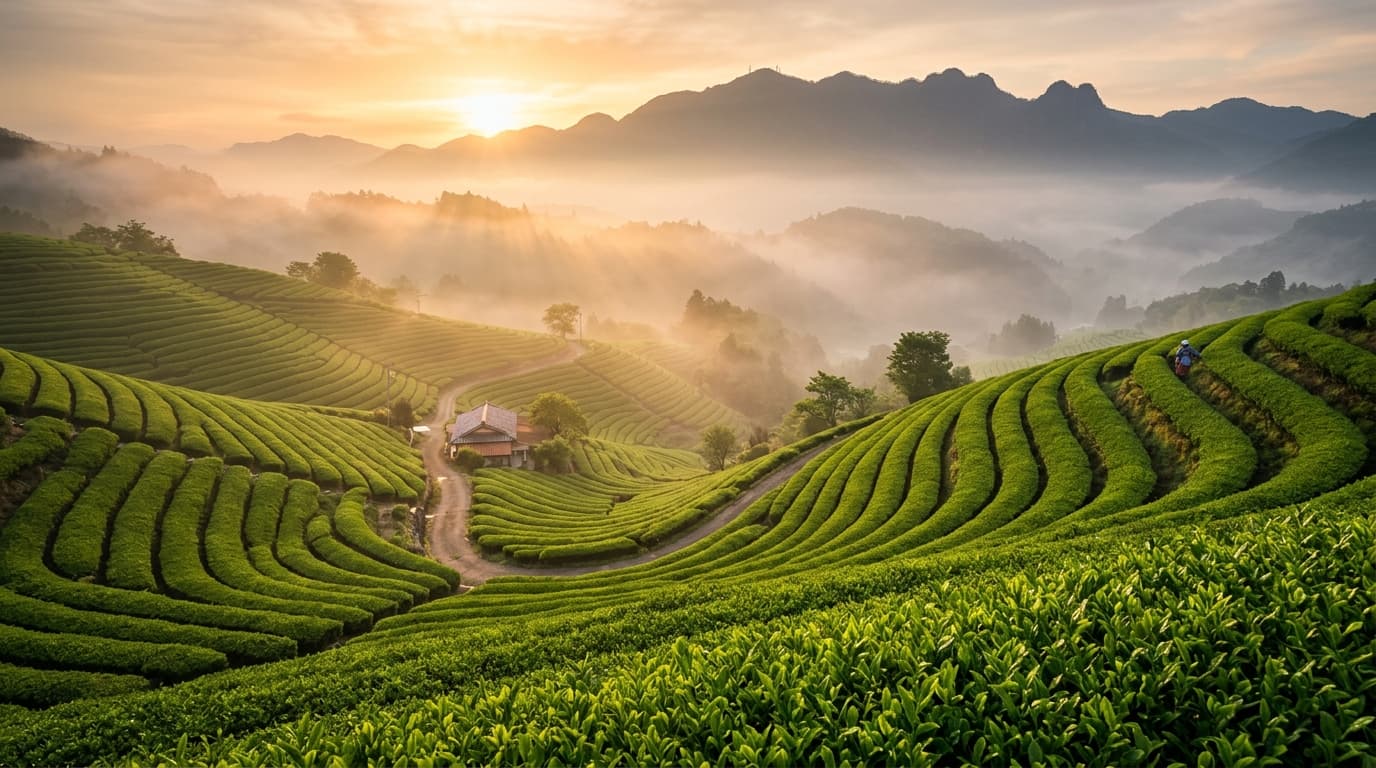
First Flush vs. Culinary Dust
When you taste grocery store matcha and cringe at the harsh, chalky bitterness, you are invariably tasting late summer cuttings of mature, sun-drenched leaves that have been flash-milled on hot industrial steel. It lacks L-theanine. It lacks sweetness.
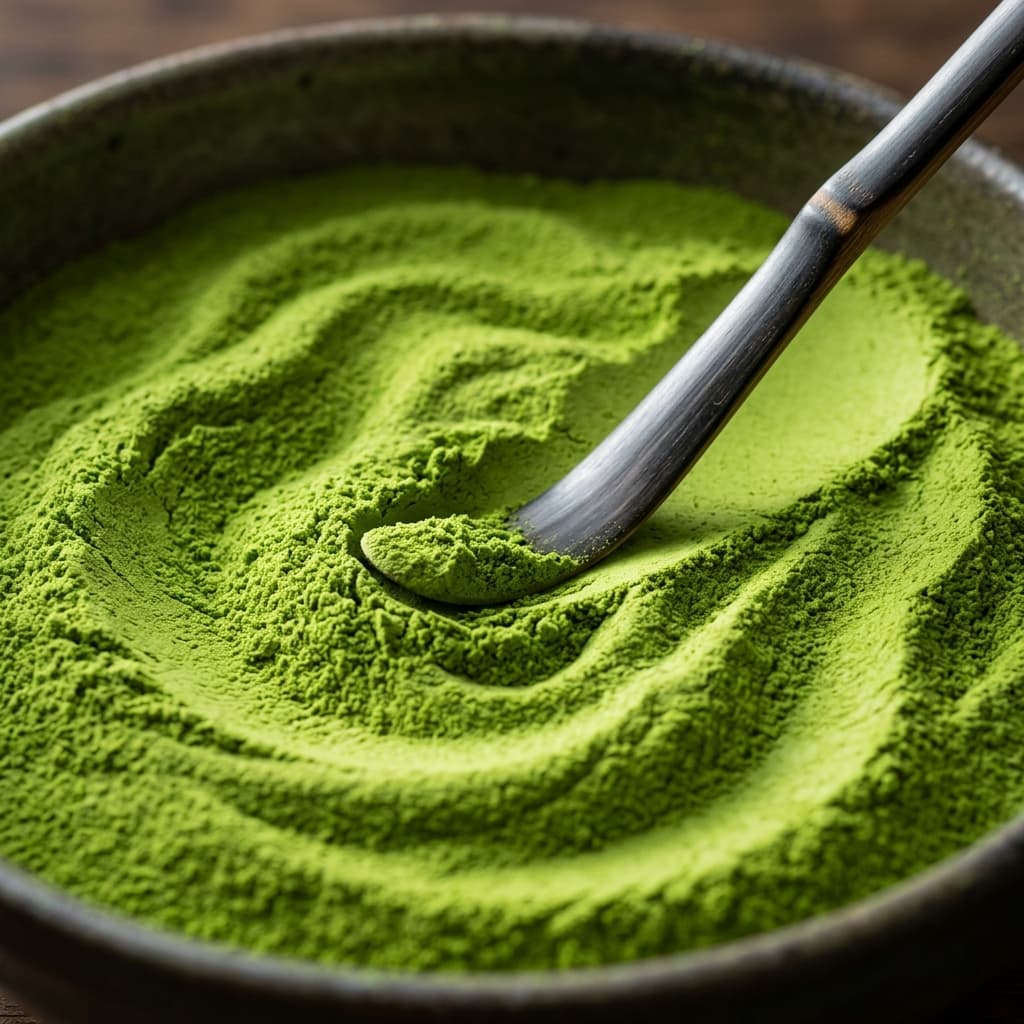
Ceremonial grade is restricted exclusively to the soft top two leaves of the first spring harvest (Ichibancha). Destemmed and deveined, only pure leaf flesh—tencha—is allowed into the stone mill.